Review Carbohydrates by Filling in the Blanks in the Following Story
3.five: Carbohydrates
- Page ID
- 16729
Where would we be without our jeans? They have been the go-to pants for many people for decades, and they are even so as popular as e'er. Jeans are made of denim, a blazon of cotton material. Cotton is a soft, fluffy cobweb that grows in a protective instance effectually the seeds of cotton plants. The fiber is virtually pure cellulose. Cellulose is the unmarried virtually arable biochemical compound found in Earth'due south living things and 1 of several types of carbohydrates.
What Are Carbohydrates?
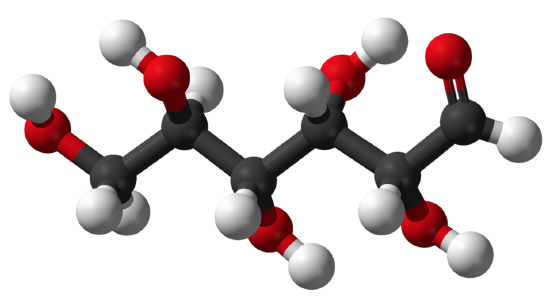
Carbohydrates are the almost mutual grade of biochemical compounds. They include sugars and starches. Carbohydrates are used to provide or store energy, among other uses. Similar near biochemical compounds, carbohydrates are built of small repeating units, or monomers, which form bonds with each other to make larger molecules, called polymers. In the example of carbohydrates, the small repeating units are known as monosaccharides. Each monosaccharide consists of six carbon atoms, as shown in the model of the monosaccharide glucose below.
Sugars
Sugars are the general proper noun for sweet, brusque-chain, soluble carbohydrates, which are found in many foods. Their function in living things is to provide energy. The simplest sugars consist of a single monosaccharide. They include glucose, fructose, and galactose. Glucose is a simple sugar that is used for energy by the cells of living things. Fructose is a simple sugar found in fruits, and galactose is a simple carbohydrate found in milk.
Other sugars comprise two monosaccharide molecules and are called disaccharides. An example is sucrose or tabular array saccharide. It is composed of ane fructose molecule and one glucose molecule. Other disaccharides include maltose (two glucose molecules) and lactose (1 glucose molecule and one galactose molecule). Lactose occurs naturally in milk. Some people can't digest lactose. If they drink milk, it causes gas, cramps, and other unpleasant symptoms unless the milk has been processed to remove the lactose.
Complex Carbohydrates
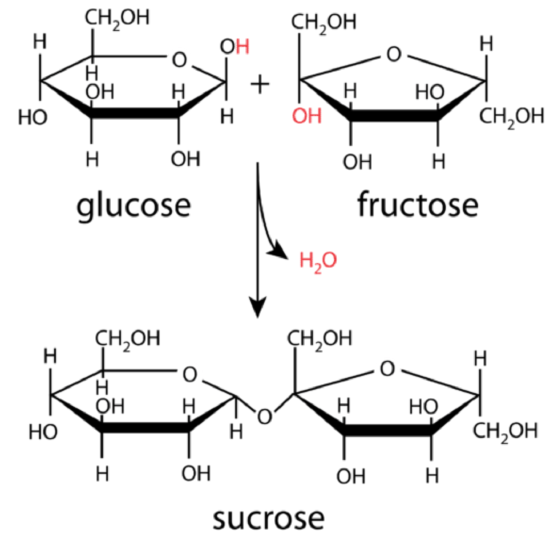
The uncomplicated sugars form the foundation of more than circuitous carbohydrates. The cyclic forms of two sugars tin exist linked together by ways of a condensation reaction. The figure below shows how a glucose molecule and a fructose molecule combine to form a sucrose molecule. A hydrogen atom from one molecule and a hydroxyl group from the other molecule are eliminated equally water, with a resulting covalent bond linking the two sugars together at that point.
Glucose and fructose combine to produce the disaccharide sucrose in a condensation reaction as shown in Figure \(\PageIndex{3}\). Sucrose, commonly known as table sugar, is an example of a disaccharide.
A disaccharide is a carbohydrate formed by the joining of ii monosaccharides. Other common disaccharides include lactose and maltose. Lactose, a component of milk, is formed from glucose and galactose, while maltose formed from two glucose molecules. During digestion, these disaccharides are hydrolyzed in the small intestine to class the component monosaccharides, which are and so absorbed beyond the intestinal wall and into the bloodstream to exist transported to the cells.
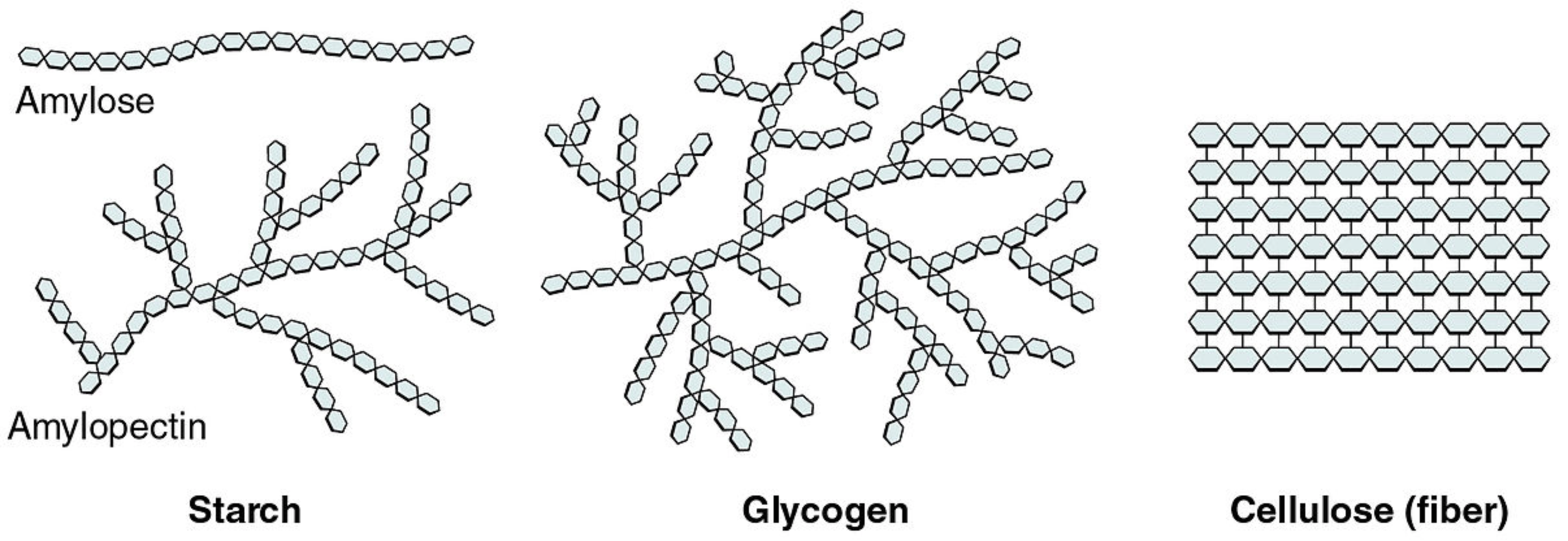
Some carbohydrates consist of hundreds or even thousands of monosaccharides bonded together in long chains. These carbohydrates are chosen polysaccharides ("many saccharides"). Polysaccharides are also referred to as complex carbohydrates. Complex carbohydrates that are found in living things include starch, glycogen, cellulose, and chitin. Each type of complex carbohydrate has dissimilar functions in living organisms simply they mostly either store energy or make upwardly sure structures of living things.
Starch
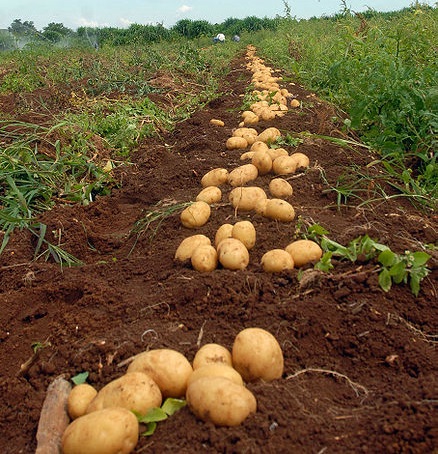
Starch is a complex carbohydrate that is made past plants to store energy. For example, the potatoes pictured below are packed full of starches that consist mainly of repeating units of glucose and other uncomplicated sugars. The leaves of potato plants brand sugars by photosynthesis, and the sugars are carried to undercover tubers where they are stored as starch. When nosotros swallow starchy foods such as potatoes, the starches are broken downwards by our digestive system to sugars, which provide our cells with energy. Starches are easily and speedily digested with the help of digestive enzymes such every bit amylase, which is institute in the saliva. If you chew a starchy saltine cracker for several minutes, y'all may get-go to gustatory modality the sugars released equally the starch is digested.
Glycogen
Animals practice not shop energy equally starch. Instead, animals shop the extra energy as the complex carbohydrate glycogen. Glycogen is a polysaccharide of glucose. It serves equally a grade of free energy storage in fungi too as animals and is the main storage form of glucose in the human body. In humans, glycogen is made and stored primarily in the cells of the liver and the muscles. When energy is needed from either storage depot, the glycogen is broken down to glucose for use by cells. Muscle glycogen is converted to glucose for use by muscle cells, and liver glycogen is converted to glucose for use throughout the residue of the body. Glycogen forms an energy reserve that tin can be quickly mobilized to come across a sudden demand for glucose, simply one that is less compact than the energy reserves of lipids, which are the chief form of energy storage in animals.
Glycogen plays a critical role in the homeostasis of glucose levels in the blood. When blood glucose levels ascension as well high, excess glucose tin can be stored in the liver by converting it to glycogen. When glucose levels in the claret fall too depression, glycogen in the liver tin be broken downwardly into glucose and released into the blood.
Cellulose
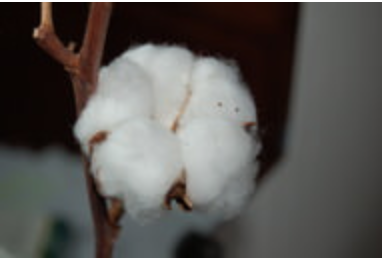
Cellulose is a polysaccharide consisting of a linear chain of several hundred to many thousands of linked glucose units. Cellulose is an of import structural component of the cell walls of plants and many algae. Human uses of cellulose include the production of cardboard and newspaper, which consist mostly of cellulose from wood and cotton fiber. The cotton fiber fibers pictured below are about ninety per centum cellulose.
Sure animals, including termites and ruminants such as cows, can assimilate cellulose with the help of microorganisms that live in their gut. Humans cannot digest cellulose, just it nonetheless plays an of import role in our diet. It acts as a water-attracting bulking agent for feces in the digestive tract and is often referred to every bit "dietary fiber."
Chitin
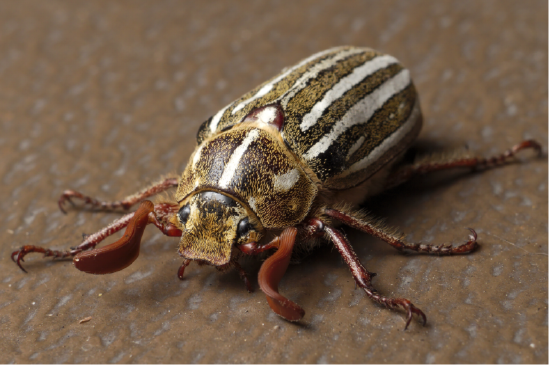
Chitin is a long-chain polymer of a derivative of glucose. It is found in many living things. For example, it is a component of the cell walls of fungi, the exoskeletons of arthropods such every bit crustaceans and insects (including the beetle pictured in Effigy \(\PageIndex{seven}\)), and the beaks and internal shells of animals such as squids and octopuses. The construction of chitin is similar to that of cellulose.
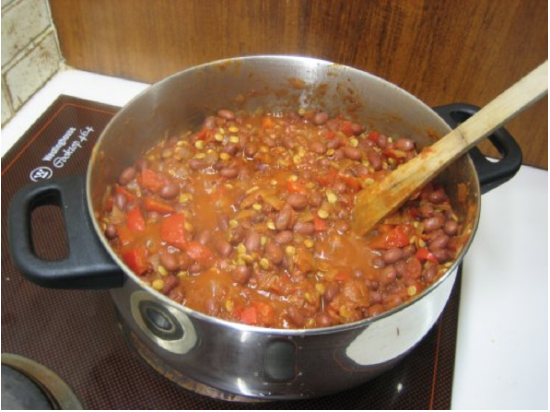
You probably know that y'all should eat plenty of cobweb, but do y'all know how much fiber you demand, how fiber contributes to good health, or which foods are good sources of fiber? Dietary fiber consists mainly of cellulose, and then it is found primarily in plant-based foods, including fruits, vegetables, whole grains, and legumes. Dietary fiber can't exist cleaved down and captivated by your digestive arrangement. Instead, it passes relatively unchanged through your gastrointestinal tract and is excreted in feces. That'southward how it helps keep yous healthy.
The fiber in food is usually classified equally either soluble or insoluble cobweb.
- Soluble fiber dissolves in water to course a gel-similar substance as information technology passes through the gastrointestinal tract. Its wellness benefits include lowering blood levels of cholesterol and glucose. Good sources of soluble fiber include whole oats, peas, beans, and apples.
- Insoluble fiber does not dissolve in water. This type of cobweb increases the bulk of feces in the large intestine and helps keep food wastes moving through, which may aid prevent or right constipation. Good sources of insoluble fiber include whole wheat, wheat bran, beans, and potatoes.
How much fiber do you need for practiced wellness? That depends on your age and gender. The Establish of Medicine recommends the daily fiber intake for adults shown in the tabular array below. Most dietitians farther recommend a ratio of about 3 parts insoluble fiber to one part soluble cobweb each day. Most fiber-rich foods contain both types of fiber, so it usually isn't necessary to proceed runway of the two types of cobweb every bit long equally your overall fiber intake is adequate.
Use food labels and online fiber counters to detect out how much total cobweb you eat in a typical day. Are you consuming plenty cobweb for proficient health? If not, consider ways to increase your intake of this important substance. For example, substitute whole grains for refined grains, eat more than legumes such as beans, and attempt to consume at least five servings of fruits and vegetables each solar day.
| Gender | Historic period 50 or Younger | Age 51 or Older |
|---|---|---|
| Male | 38 grams | 30 grams |
| Female | 25 grams | 21 grams |
Summary
- Carbohydrates are the most common class of biochemical compounds. The basic edifice block of carbohydrates is the monosaccharide, which consists of six carbon atoms.
- Sugars are sweet, curt-concatenation, soluble carbohydrates that are found in many foods and supply usa with energy. Simple sugars, such as glucose, consist of only one monosaccharide. Some sugars, such as sucrose, or table sugar, consist of ii monosaccharides and are called disaccharides.
- Complex carbohydrates, or polysaccharides, consist of hundreds or even thousands of monosaccharides. They include starch, glycogen, cellulose, and chitin. They mostly either shop energy or grade structures, such every bit jail cell walls, in living things.
- Starch is a complex carbohydrate that is fabricated by plants to store energy. Potatoes are a expert food source of dietary starch, which is readily broken downward to its component sugars during digestion.
- Glycogen is a complex saccharide that is fabricated by animals and fungi to store free energy. Glycogen plays a critical part in the homeostasis of blood glucose levels in humans.
- Cellulose is the single most common biochemical compound in living things. It forms the cell walls of plants and certain algae. Like most other animals, humans cannot assimilate cellulose, but it makes upwards about of the crucial dietary cobweb in the human diet.
- Chitin is a complex carbohydrate, like to cellulose, that makes up organic structures such as the cell walls of fungi and the exoskeletons of insects and other arthropods.
Review
- What are carbohydrates? Describe their structure.
- Compare and contrast sugars and complex carbohydrates.
- Identify the four main types of circuitous carbohydrates and their functions.
- If y'all chew on a starchy nutrient such as a saltine cracker for several minutes, information technology may commencement to taste sugariness. Explain why.
- True or Faux. Glucose is mainly stored past lipids in the human body.
- Put the following carbohydrates in club from smallest to largest: cellulose; fructose; sucrose
- Proper noun three carbohydrates that incorporate glucose every bit a monomer.
- Jeans are fabricated of tough, durable cotton wool. Explicate how you lot call back this fabric gets its tough qualities, based on what you know about the structure of carbohydrates.
- Which practice you call up is faster to digest — simple sugars or complex carbohydrates? Explicate your answer.
- True or False. Cellulose is cleaved downwardly in the man digestive system into glucose molecules.
- Which type of fiber dissolves in water? Which type does not deliquesce in h2o?
- What are the similarities and differences between muscle glycogen and liver glycogen?
- Which saccharide is used direct past the cells of living things for energy?
- Which of the following is non a circuitous saccharide?
- chitin
- starch
- disaccharide
- none of the above
Explore More
- Torso paint by Cuerpos Pintados, licensed CC By 2.0 via Wikimedia Eatables
- Glucose public domain via Wikimedia Commons
- Sucrose by Christopher Auyeung and Joy Sheng, CC BY-NC 3.0, via CK-12
- Potatoes past Elza Fiuza/ABr, licensed CC BY three.0 via Wikimedia Commons Brazil
- Cotton by KoS, released into the public domain via Wikimedia Eatables
- Ten-lined June protrude by Junkyardsparkle, defended CC0 via Wikimedia Eatables
- Three Polysaccharides by OpenStax College, licensed CC By iii.0 via Wikimedia Commons Brazil
- Beans by Charles Brooking, released into the public domain via Wikimedia Commons
- Text adapted from Man Biological science by CK-12 licensed CC By-NC 3.0
Source: https://bio.libretexts.org/Bookshelves/Human_Biology/Book:_Human_Biology_%28Wakim_and_Grewal%29/03:_Chemistry_of_Life/3.05:_Carbohydrates
0 Response to "Review Carbohydrates by Filling in the Blanks in the Following Story"
إرسال تعليق